 Mekong Delta Mekong Delta
Walking down Norodom Boulevard in Cambodia’s capital Phnom Penh last Wednesday, I couldn’t be sure whether the explosions were gunfire or simply one of the city’s half-million mopeds backfiring. I took no chances and ducked behind a wall. To the south I could see a column of smoke rising from the embassy of Cambodia’s next-door neighbour Thailand, as anti-Thai protesters rampaged through the compound looting and setting fire to buildings. The Thai ambassador escaped over a back fence and was rescued by boat. Elsewhere in the city, Thai hotels and airline offices were also attacked. By Thursday one man had died, and 500 prominent Thais had been evacuated by the Thai military.
The rioting seems to have been sparked off by a tragic misunderstanding. A Cambodian newspaper had run a bogus story claiming that Suwanan Kongying, a popular so-called ‘heart-throb’ Thai actress, had asked for Cambodia’s world-famous Angkor Wat temple complex to be returned to Thailand. Angkor Wat lies well inside Cambodian territory, accounts for most of its tourism revenue, and hasn’t been disputed in modern times. But the two countries have other ongoing disputes about land and sea borders, and many Cambodians also deeply resent the economic success of their more powerful neighbour, which they say rests partly on illegal exploitation of Cambodian timber and other natural resources.
The escalation happened quickly and without warning. An eyewitness told me police and fire crews seemed too stunned to act. Today, police charged the editor of the newspaper that carried the false story with inciting the riots. Meanwhile, perhaps luckily, shops and offices are closed for the Chinese New Year celebrations. As they look out over the deserted streets, Cambodians and Thais are praying that it will be ‘business as usual’ when they reopen.
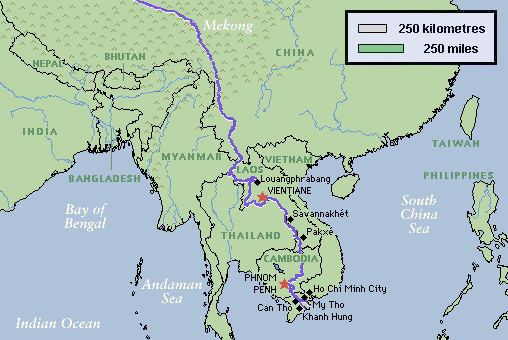
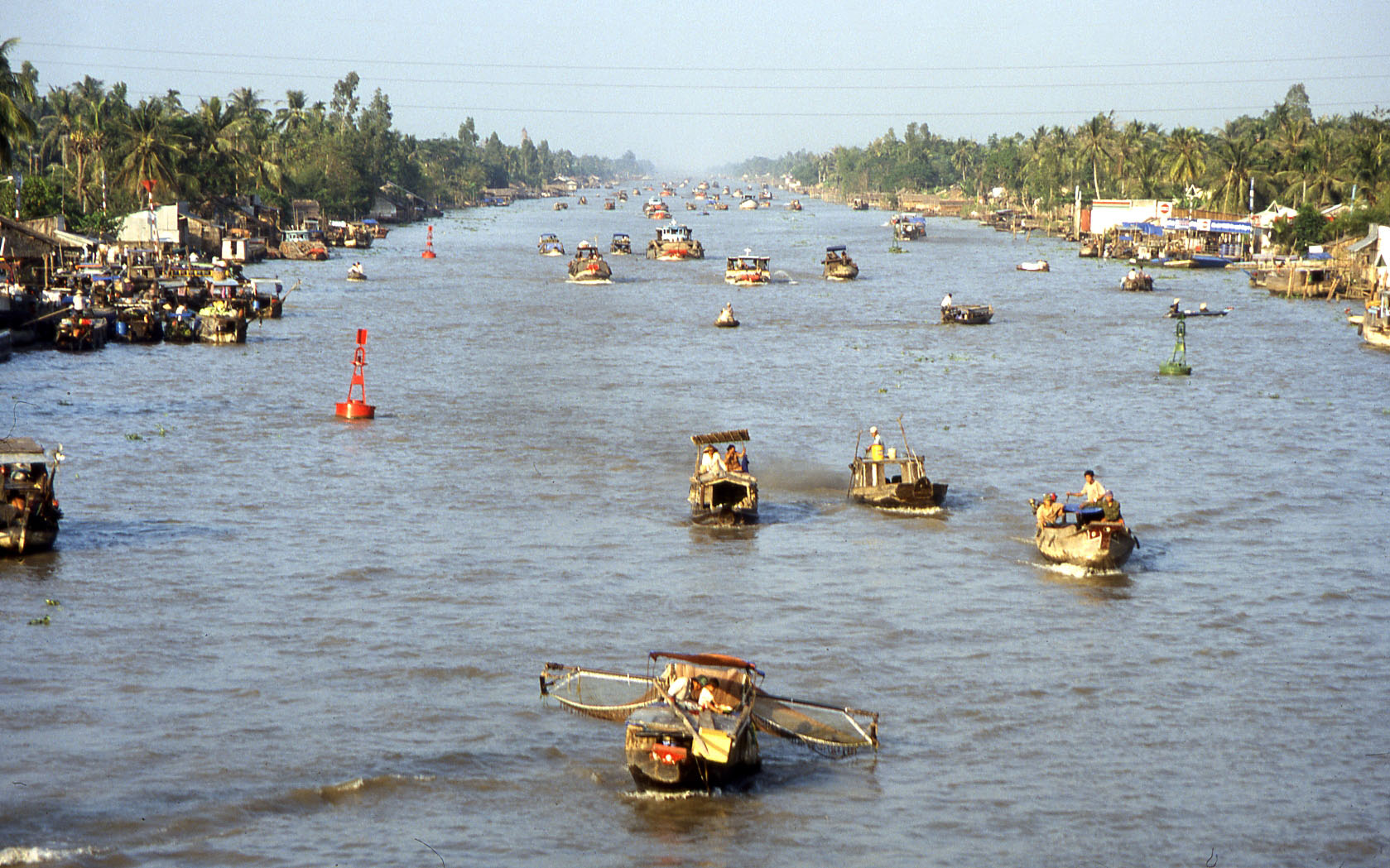
For me this was an unexpected interlude in a trip already full of delightful twists and turns. Starting among the endless rice-paddies of the Mekong Delta, I took a tourist boat up one of the river’s many channels to the Vietnamese city of Can Tho, and from there continued by bus, motorbike and finally on foot to a village called Bang Tang where a rather special man was waiting for me. Sixty-nine year old Ong San E has lived in the village all his life. I had been put in touch with him by a mutual friend, and found him relaxing by a fishpond in his orchard. During his lifetime this land has been occupied first by the French, then by the Americans and finally by the Viet Cong; but contemplating his fish, he seemed completely free of malice. After a sizzling rice and tofu lunch he took me out on his motorbike, introducing me to friends and neighbours, and then drove me to a jetty where for the first time I could appreciate the importance of the Mekong to this vast region. Scores of vessels, from sampans to barges to ocean-going cargo ships, were making their way up and down the half-mile wide channel. The smaller boats were piled high with produce from the countryside – rice, coconuts, pineapples and watermelons. It was an aquatic M1. I was barely 100 miles into my journey, but could see I was in for many surprises.